Table of Contents
SIS Migration in Higher Education: Modernize First
Anthology’s SIS and ERP business now belongs to Ellucian, and more than 260 higher education institutions woke up to a new vendor roadmap they never voted on. If your campus is one of them, the SIS migration higher education path you’re being handed by default runs 18 to 36 months and rarely holds to budget. That default isn’t your only option.
You can modernize and extend the systems your institution already owns, build an integration layer that keeps admissions, finance, and student records running through the transition, and come out the other side owning your data and your documentation instead of renting access to someone else’s platform.
This guide is for the IT Director or CTO who just learned their vendor’s roadmap changed hands, and for the President or CFO who has to approve whatever comes next.
Quick answer: modernize your SIS, don’t replace
- Ellucian’s acquisition of Anthology doesn’t force your institution into a full SIS replacement. It’s a decision point.
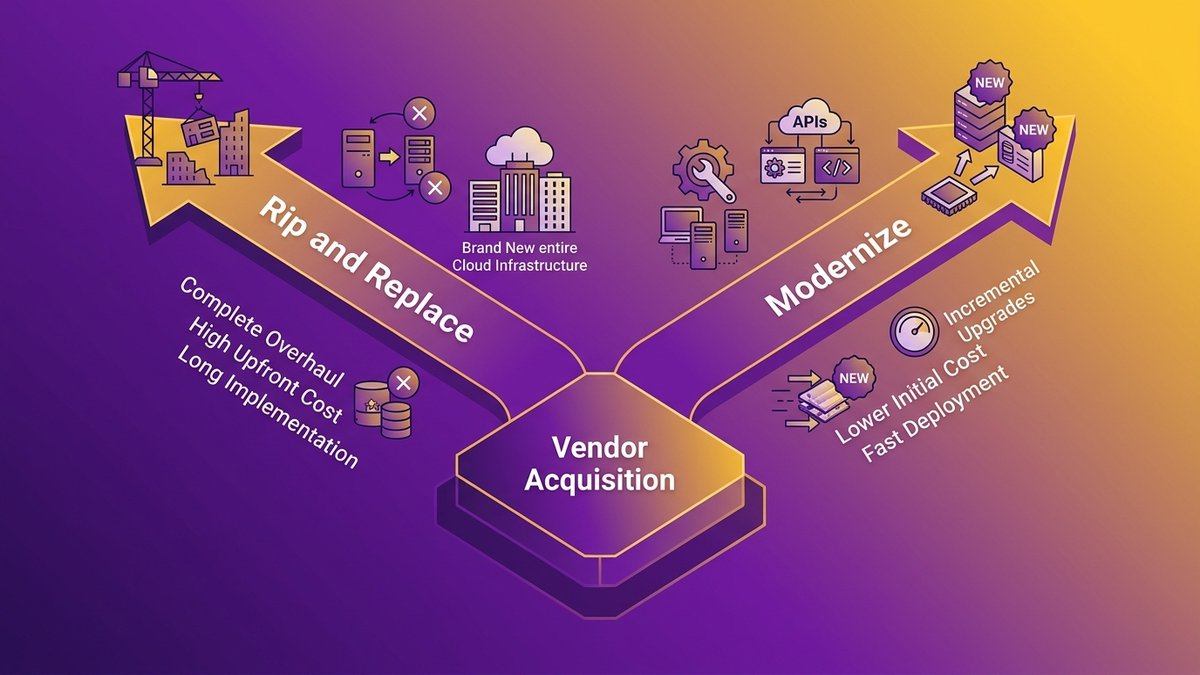
- Rip-and-replace SIS migrations run 18 to 36 months. Standard timelines rarely survive first contact with a real campus budget cycle.
- An integration and data layer keeps admissions, finance, and records running while you evaluate options on your own schedule.
- Modernizing systems you already own incrementally often costs less and disrupts less than a forced platform swap.
- Complete documentation transfer during any migration work stops the institution from trading one vendor lock-in for another.
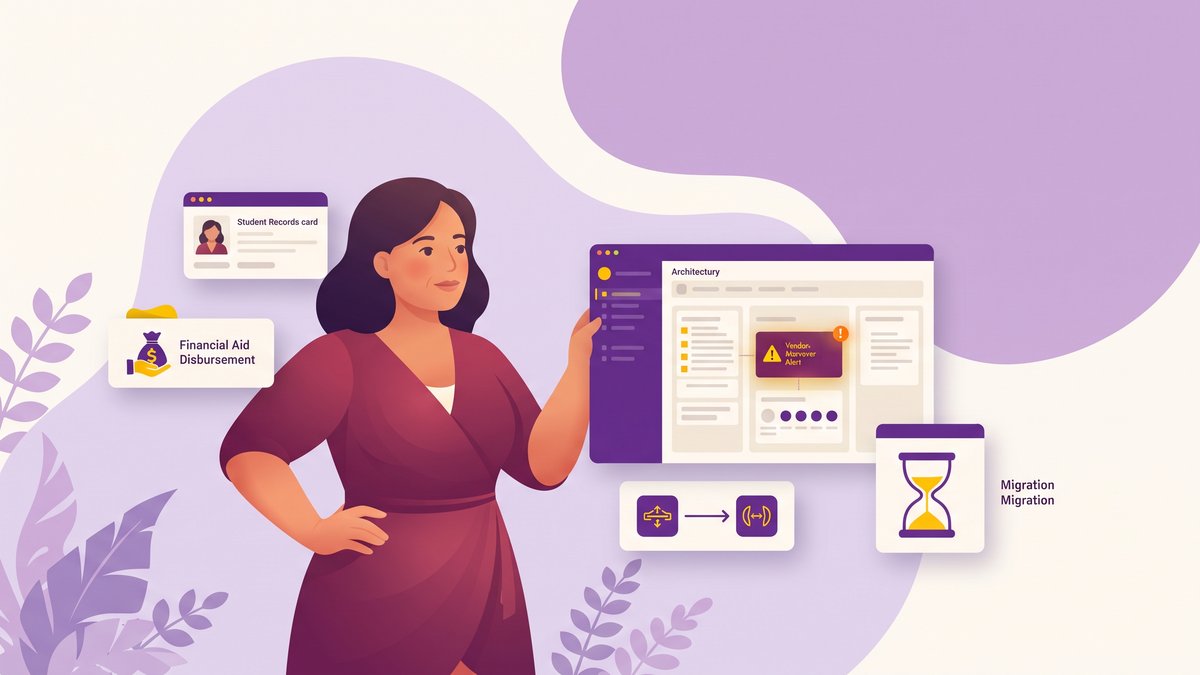
A mid-size university IT team reviewing what a vendor acquisition actually changes on campus
What the Anthology-to-Ellucian Consolidation Actually Means for Your Campus
Ellucian completed its acquisition of Anthology’s student information system and ERP business, folding in more than 260 institutions that had no vote in the matter. ERP Today reported it straight from the deal announcement page. If your campus ran Anthology Student, PowerCampus, or another product in that portfolio, your roadmap, your support contract, and your renewal terms all sit inside a different company now.
Anthology had been working through financial restructuring before the deal closed , and Ellucian picked up ownership of the ERP and SIS lines as part of that process. The question that matters for your institution isn’t the deal mechanics but whether your specific product sits on a roadmap Ellucian intends to keep funding, sunset gradually, or fold into its own SaaS platform on a timetable you don’t control.
PowerCampus customers in particular should ask their account team directly: is this product still on an active development roadmap, or is it being positioned as a migration path into Ellucian’s newer SaaS offering? Get that answer in writing. Don’t assume silence means stability.
The Rip-and-Replace Default: Why Standard SIS Migration in Higher Education Costs Years and Millions
A rip-and-replace SIS migration doesn’t start with a kickoff meeting. It starts with a vendor timeline that assumes your institution has years of runway and a budget line nobody’s touched yet.
The 18-to-36-Month Timeline Institutions Are Quietly Signed Up For
The standard phased approach vendors describe (data audit, cleansing, vendor selection, data mapping, test migration, parallel running, go-live) sounds orderly on a slide. In practice, a mid-size university runs this across multiple academic terms, because you can’t cut over admissions or financial aid processing in the middle of a semester. Most institutions default to this path anyway, mostly because nobody hands them an alternative framework until the vendor conversation is already underway.
Where the Budget Actually Goes (and Why It Overruns)
The education ERP market is projected to grow from $23.13 billion in 2026 to $41.18 billion by 2030, a 15.5% compound annual growth rate, according to Research and Markets. That growth comes from institutions signing new platform contracts, not from efficiency gains on old ones. Budget overruns on rip-and-replace projects typically come from three places: data remediation nobody scoped upfront, integration rebuilding for systems the vendor never audited, and staff retraining that gets underestimated by half. hidden tax of technical debt
Migration Is a Choice, Not a Sentence: A Decision Framework for Replace vs. Modernize
A vendor acquisition creates urgency. It doesn’t create an obligation. Your institution gets to decide whether the systems underneath your operations are actually failing, or whether you’re being pushed onto an acquirer’s rails on a timeline that serves their integration roadmap more than your campus.
Signs Your Systems Are Genuinely at End of Life
- Your vendor has confirmed, in writing, that support and security patches are ending on a specific date
- Core compliance requirements (FERPA reporting, financial aid processing rules) can no longer be met without custom workarounds
- The system can’t integrate with anything built after roughly 2015 without a consultant on retainer
Signs You’re Being Pushed Onto the Acquirer’s Rails Prematurely
- The “end of support” date keeps moving whenever you ask for specifics
- Your current system still meets FERPA, financial aid, and reporting requirements without modification
- The proposed replacement timeline was set by the vendor’s integration roadmap, not by an assessment of your actual systems
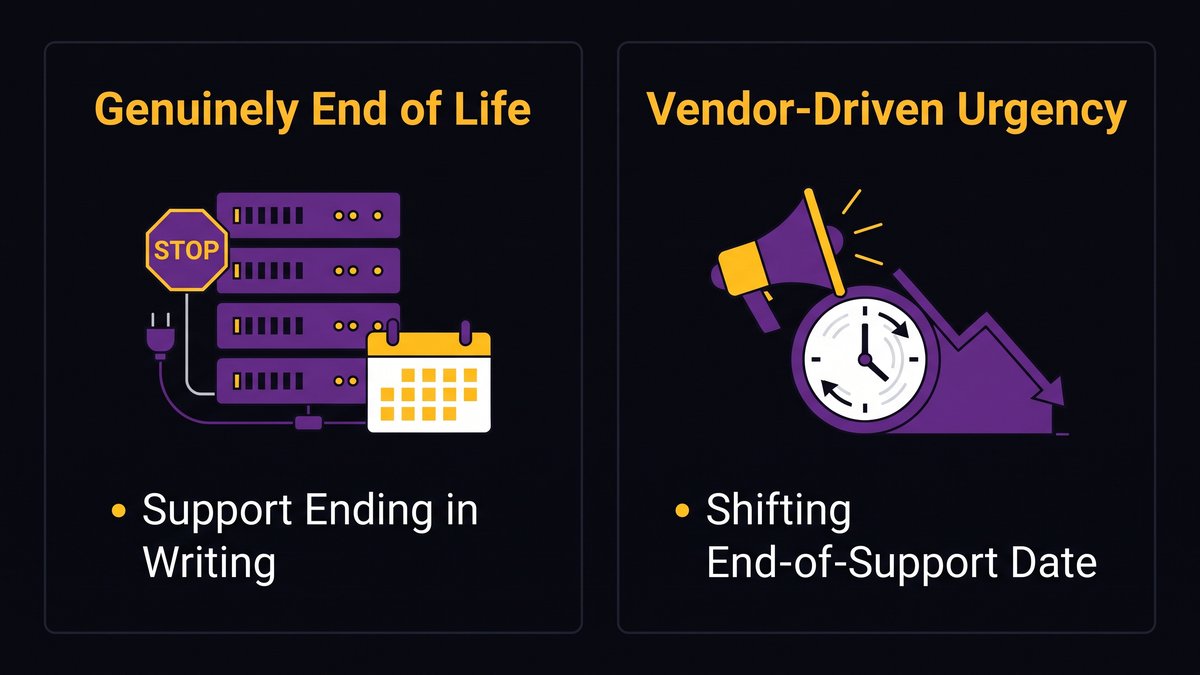
A simple framework campus IT leaders can use to separate genuine end-of-life systems from vendor-driven urgency
Which one are you actually looking at? Most mid-size institutions, when they run this checklist honestly, find they’re closer to the second list. EDUCAUSE publishes ongoing research on higher ed IT decision-making that’s worth reviewing before you commit either way.
Where Forced Migrations Actually Break: Data, Integrations, and Institutional Knowledge
Ask any registrar what happens the week after a legacy SIS goes dark, and you’ll hear about the spreadsheet that quietly reconciled financial aid disbursements for six years. That spreadsheet was never in the migration scope document. It never is.
Data Migration and Data Quality
Years of manual corrections, duplicate student records from merged systems, and inconsistent course numbering all get inherited by whatever replaces your SIS. A rushed migration doesn’t clean that up. It just moves the mess to a new platform with a shinier interface.
The One-Off Integrations Holding Admissions, Finance, and Records Together
According to ListEdTech, 19% of higher education institutions run a homegrown grant management system, compared with just 1 to 5% for most other administrative categories, the highest homegrown share of any system type on campus. Those tools rarely show up in a vendor’s migration scope document, and they’re exactly the integrations that break first when a platform changes underneath them.
The Undocumented Knowledge That Leaves When the Platform Does
The person who knows why the financial aid export runs at 2 a.m. instead of during business hours usually isn’t in the migration planning meetings. When that person retires or leaves mid-project, the reason leaves with them. 1EdTech maintains interoperability standards that can reduce how much of this knowledge lives only in one person’s head, but only if your integration layer is built to use them.
The Integration and Data Layer That Keeps Your Campus Running Through the Transition
An integration layer has one job during a vendor transition: keep admissions, finance, and student records talking to each other while the platform question gets resolved on your own schedule, not the acquirer’s.
This is middleware work, not platform work. You build APIs that sit between your existing SIS, your finance system, and your student records, so daily operations don’t depend on any single vendor’s roadmap staying stable. Martin Fowler’s strangler fig pattern describes the underlying approach well: you route traffic through a new layer incrementally, replacing pieces of the old system as they’re actually ready, rather than freezing operations for a big-bang cutover.
For a registrar’s office, this looks like an API that keeps enrollment data synchronized correctly even if the underlying SIS product’s support status changes twice during your evaluation period. For finance, it means disbursement processing keeps running whether or not you’ve decided on a replacement platform yet. vendor handoff checklist
Modernize and Extend What You Already Own, Incrementally
Incremental modernization isn’t about nursing broken systems along for another year. You replace the parts that are actually failing, one module at a time, while everything else keeps working.
Start with an architecture assessment that maps which parts of your current SIS environment are genuinely at risk versus which ones just look old. Nexa Devs has run this kind of work inside institutions like UNED, Europe’s largest distance-learning university, absorbing years of growing system complexity without forcing a full platform swap or a proportional expansion of internal IT headcount. The pattern holds in higher ed generally: modernize the module that’s actually failing, test it against live operations, and move to the next one only once the first is stable.
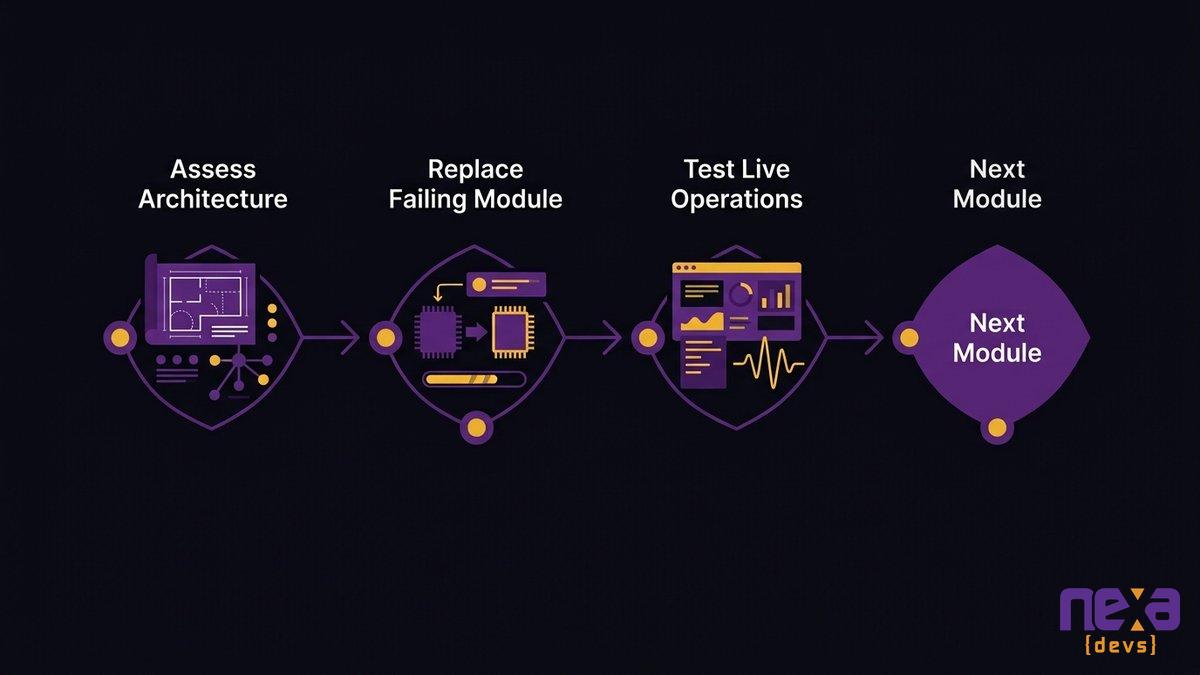
A phased modernization path that replaces failing modules one at a time instead of the whole platform at once
This approach costs less than a full rewrite for a simple reason: you’re not paying to rebuild what already works. You’re paying to fix what doesn’t, with AI-assisted architecture analysis and testing built into every phase instead of bolted on at the end.
Owning Your Systems and Your Documentation: Never Captive to One Vendor’s Roadmap Again
The Anthology-to-Ellucian consolidation is what vendor lock-in looks like from the outside: a decision made somewhere you weren’t in the room, executed on a timeline you didn’t set.
As Ashwin Ballal, CIO at Freshworks, states: “Legacy systems have become so complex that companies are increasingly turning to third-party vendors and consultants for help, but the problem is that, more often than not, organizations are trading one subpar legacy system for another.” That’s the trap worth naming directly: swapping vendors without changing the underlying dependency doesn’t solve anything. It only resets the clock on the next forced migration.
Pragmatic Coders puts it precisely: legal IP ownership isn’t the same as practical operational control. You can own the contractual rights to your data and still be functionally locked out if nobody on your team, or your partner’s team, ever documented how the pieces connect. Dreamix has documented the same failure mode from the other direction: documentation gaps and undocumented dependencies create expensive problems months after a transition completes, long after anyone thought to check.
Complete documentation, architecture diagrams, data schemas, integration maps, transferred to your institution at every project milestone instead of buried in a final deliverable, is the structural fix. institutional knowledge loss
Building the Business Case for the President and CFO
Your CFO doesn’t need architecture diagrams. They need three numbers, side by side: what doing nothing costs, what rip-and-replace costs, and what incremental modernization costs.
- What doing nothing costs. Ask what happens to compliance, financial aid processing, and reporting accuracy if support genuinely ends on your current product with no plan in place.
- A full rip-and-replace typically runs into seven figures once staff time, data remediation, and multi-year vendor fees are counted, not just the software license.
- Incremental modernization spreads cost across budget cycles instead of requiring one large capital approval, and it doesn’t require freezing all other IT projects for two to three years while the migration runs.
NACUBO publishes budget planning frameworks that can help translate this into language your board will recognize. A full rip-and-replace is rarely the right call for a mid-size institution mid-transition. Modernizing what you already own, on your own schedule, almost always is.
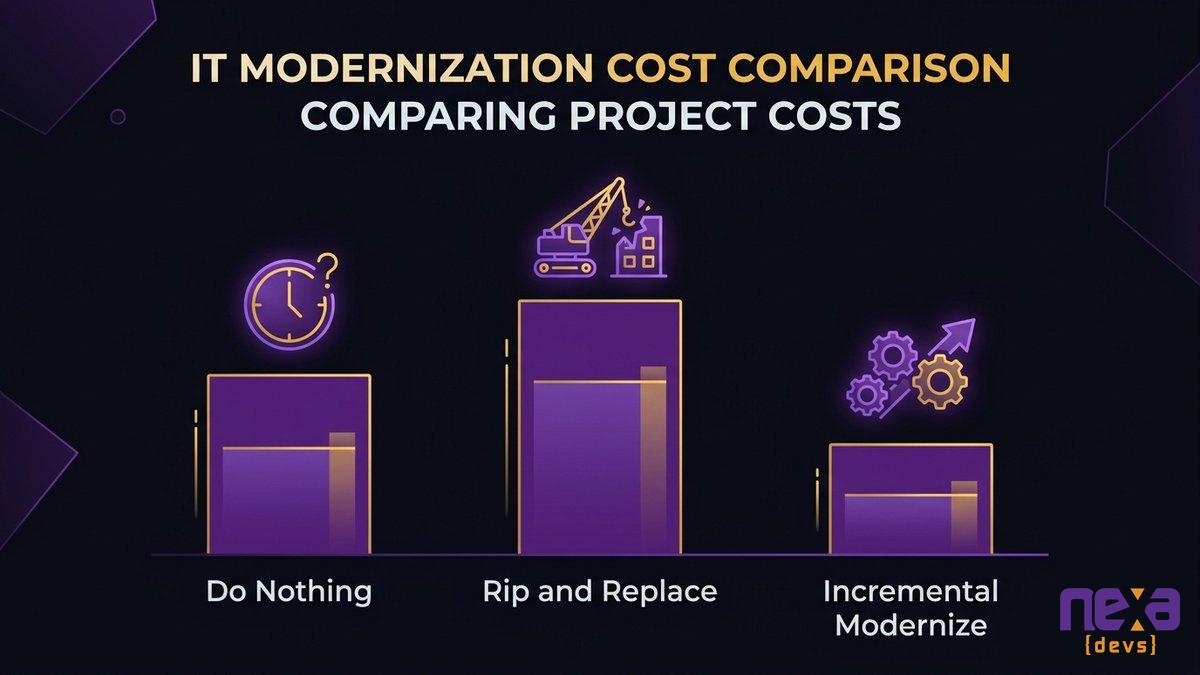
A comparison of doing-nothing, rip-and-replace, and incremental modernization costs prepared for a board presentation
Nexa Devs builds the integration and data layer that keeps your campus running through a vendor transition, modernizes the systems you already own instead of forcing a rebuild, and transfers complete documentation at every milestone so your institution owns what it’s paying for. Schedule an architecture assessment to map what’s actually at risk in your current SIS environment before your next contract renewal deadline forces the decision for you.
FAQ
What does the Ellucian acquisition of Anthology mean for my university’s SIS?
If your institution used Anthology Student, PowerCampus, or another Anthology SIS or ERP product, Ellucian now owns that platform’s roadmap, support terms, and pricing. That doesn’t automatically force a migration. Check your contract’s renewal terms and ask your account rep directly about support timelines for your specific product.
How long does a typical SIS migration take in higher education?
A full rip-and-replace SIS migration for a mid-size university typically runs 18 to 36 months, covering data migration, integration rebuilding, testing, and staff training. Incremental modernization of existing systems usually moves faster, since you’re replacing pieces instead of rebuilding the whole platform at once.
Can my institution keep its current SIS instead of switching vendors?
Yes, if your current system still meets core functional and security needs. A vendor acquisition changes who owns the roadmap, but your existing SIS doesn’t suddenly stop working. Many institutions modernize and extend what they have instead of accepting a forced replacement timeline.
What is a data integration layer, and why does it matter during an SIS transition?
A data integration layer is middleware that connects your SIS, finance system, and student records so they keep exchanging data correctly, even while the underlying platform question is unresolved. It keeps daily operations running without forcing an immediate full replacement decision.
How much does higher education ERP modernization cost?
Costs vary widely by scope. The global education ERP market is projected to grow from $23.13 billion in 2026 to $41.18 billion by 2030, according to Research and Markets. Incremental modernization of owned systems generally costs less than a full platform rip-and-replace, since you’re not paying for a complete rebuild.
What should be in an SIS vendor contract to prevent future lock-in?
Require complete documentation transfer, including data schemas, integration maps, and architecture records, as a standard deliverable rather than an optional add-on. Tie documentation delivery to project milestones instead of final payment. Confirm you retain practical operational control of your data, not just legal ownership on paper.