

Table of Contents
Slow Release Cycles Aren’t a People Problem
If features that used to ship in two weeks now take twelve, your developers almost certainly did not get worse at their jobs. The system around them got more expensive to change. That is a different problem, and it takes a different fix.
Slow release cycles happen because every change now touches more of the system than it should. More surface area means more re-verification, and once re-verification gets expensive, batching changes into bigger and riskier releases starts to look like the only safe option left. How fast you ship tracks how much you trust the system, which is why pushing the team harder does so little.
Whether you are the CEO watching the roadmap slip or the CTO who already knows why and needs the language to explain it upward, what follows is the mechanism behind the slowdown, why AI coding tools haven’t closed it, and four questions that measure your own cost of change.
Quick answer: why release cycles slow down
- Slow release cycles usually mean the system got expensive to change, not that developers got less productive.
- Every change touches more of the system than it should, so teams batch changes into bigger, riskier releases to stay safe.
- AI coding tools haven’t fixed this because the bottleneck was never typing speed. Re-verification and confidence set the pace.
- Four questions reveal your real cost of change: time to production, waiting versus working, regression share, and deferred work.
- Measure your cost of change before picking a modernization approach. Don’t default to a rewrite because it feels decisive.
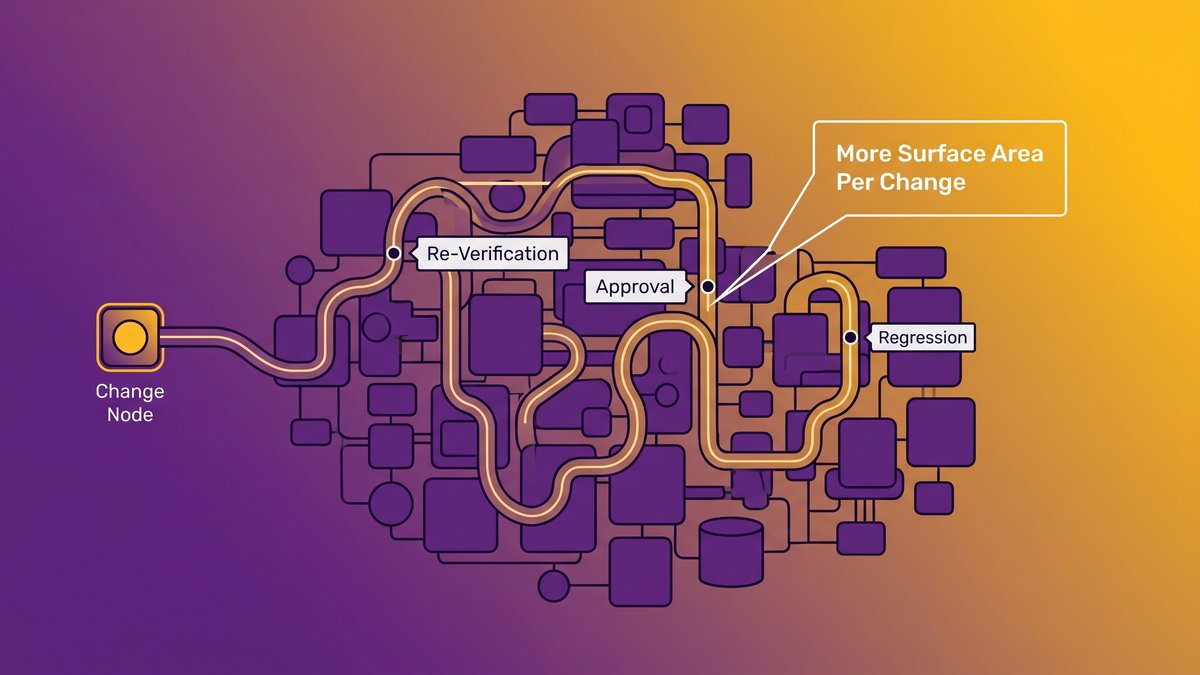
A single change has to clear more checkpoints than it should when a system grows without clear boundaries.
Your Developers Are Not Unproductive. Your System Got Expensive to Change.
A mid-market CEO told the team at modernization consultancy Corgibytes exactly this: “Features used to take two weeks to push three years ago. Now they’re taking 12 weeks. My developers are super unproductive.” He had the facts right and the diagnosis wrong.
His developers didn’t get slower. His system got more expensive to change. The wording matters because it decides where the money goes next.
Two different problems, two different fixes
A productivity problem gets solved with headcount, training, or a new project management tool. A cost-of-change problem gets solved by reducing how much of the system a typical change has to touch, which makes it an architecture problem that no change to the org chart ever reaches. Hire five more engineers into a system where every change ripples outward, and you’ll ship the same twelve-week features, just with five more people billing hours against them.
Why the productivity diagnosis sends the money to the wrong place
Boards and budget owners default to the productivity story because it’s the comfortable one. It doesn’t implicate a decade of architectural decisions, and it comes with a familiar fix: hire, pressure, repeat. First Round Review’s interview with Corgibytes is worth reading in full. The CEO quoted there isn’t an outlier, according to the piece, just the most quotable version of a call Corgibytes fields regularly.
What Twelve-Week Features Actually Cost the Business
Twelve weeks for a feature that used to take two annoys every customer waiting on it. The costlier damage is a budget problem most leadership teams never trace back to engineering.
What slips first: time to market and customer patience
Every week a feature sits in the pipeline is a week a competitor can ship something comparable first, a renewal conversation goes unanswered, or a sales team promises a date it can’t keep. Engineering dashboards don’t capture any of that. Churn numbers and stalled deals do.
The compounding loop that shrinks next year’s budget
The quieter mechanism works like this: a system that’s expensive to change gets starved of the features that would make it more valuable, which justifies an even smaller budget next cycle, which leaves the system harder to touch the year after. McKinsey’s research puts the diversion at 10 to 20 percent of the technology budget earmarked for new products pulled instead into resolving tech debt, though that figure comes from 50 CIOs at financial-services and technology firms above a billion in revenue, so read it as directional rather than a mid-market benchmark.
As Skylar Roebuck, CTO at Solvd, states: “AI capability is compounding rapidly, and the real risk for mid-market companies is delay.” The same compounding works against you on the budget side of this problem, not just the competitive side. If this loop sounds familiar, we’ve written about the full mechanics of it in our piece on the compounding maintenance tax.
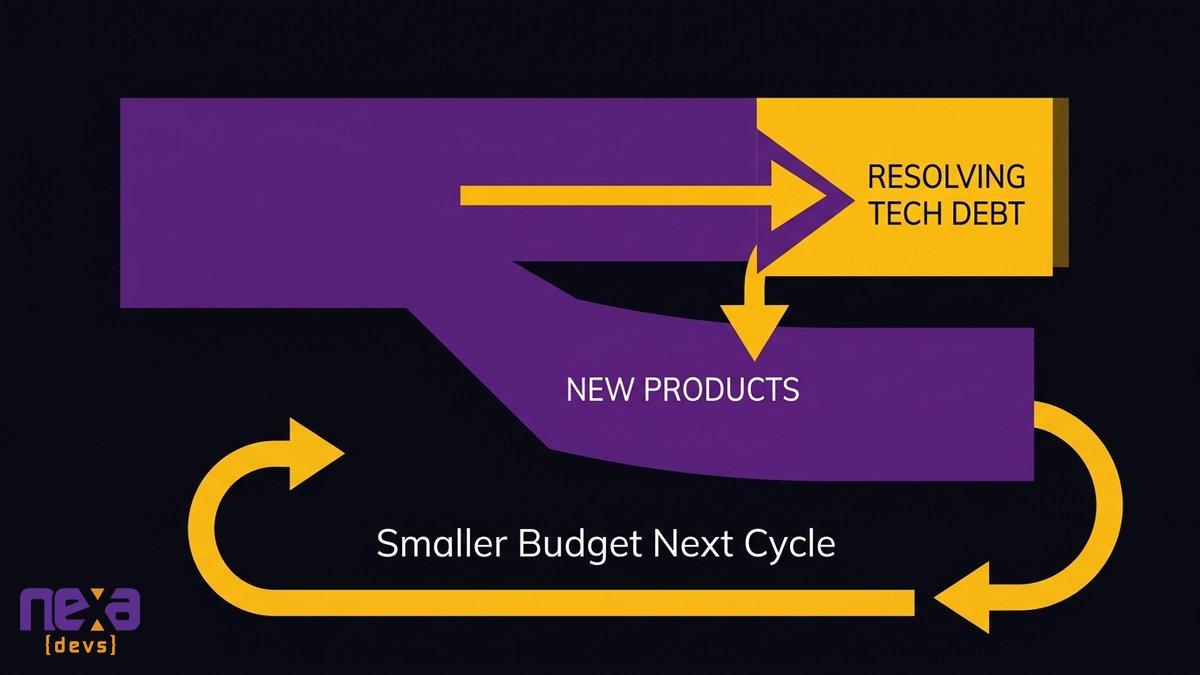
Budget that should fund new features gets pulled into resolving technical debt instead.
The Mechanism: Every Change Touches More of the System Than It Should
More surface area per change leads to more re-verification, re-verification leads to batching, and batching makes every release bigger. It’s arithmetic, and nobody ever bothered to write it down.
More surface area per change
In a system built without clear boundaries, a change to one feature can ripple into three others that share the same database table, the same authentication flow, or the same untested integration point. The engineer making the change has no reliable way to know how far the ripple goes, so they have to assume it goes far.
More re-verification per change
If you can’t be sure what else moved, you test more of the system than the change itself touched, every single time. Call that caution if you like. It is really the only honest response to not knowing the blast radius.
So the safe move is to batch, and batching makes every release bigger
Re-verifying one small change is expensive relative to its size, so teams bundle several changes into one release to spread that fixed testing cost across more work. Each bundled release is now bigger, which means more can go wrong, which means more approval and more caution, which slows the next release too. Martin Fowler’s writing on technical debt describes a version of this same dynamic from the engineering side: debt you don’t pay down charges interest on every future change.
The Regression Wall: Why Your Release Size Is Set by Confidence
Developers aren’t slow because they test too much. They’re slow because they can’t predict what breaks when they ship, and you can put a number on that gap.
What share of a release window disappears into re-testing
Ask any engineering lead how much of a typical release cycle goes to re-running regression tests against code nobody touched this sprint, and you’ll usually get an uncomfortable pause before the answer. The pause tells you more than the number will. Stack Overflow’s 2024 Developer Survey found that 62.4% of developers named the sheer amount of technical debt as their single biggest frustration on the job, nearly twice the share who pointed to build or deployment complexity instead.
The changes that never get made because nobody is confident
The more expensive part never shows up as a line item. It’s the change quietly dropped from the sprint because nobody wants to own the risk of touching that part of the system. Nothing misses a deadline, because nothing was ever scheduled, and the roadmap gets shorter without anyone deciding to shorten it.
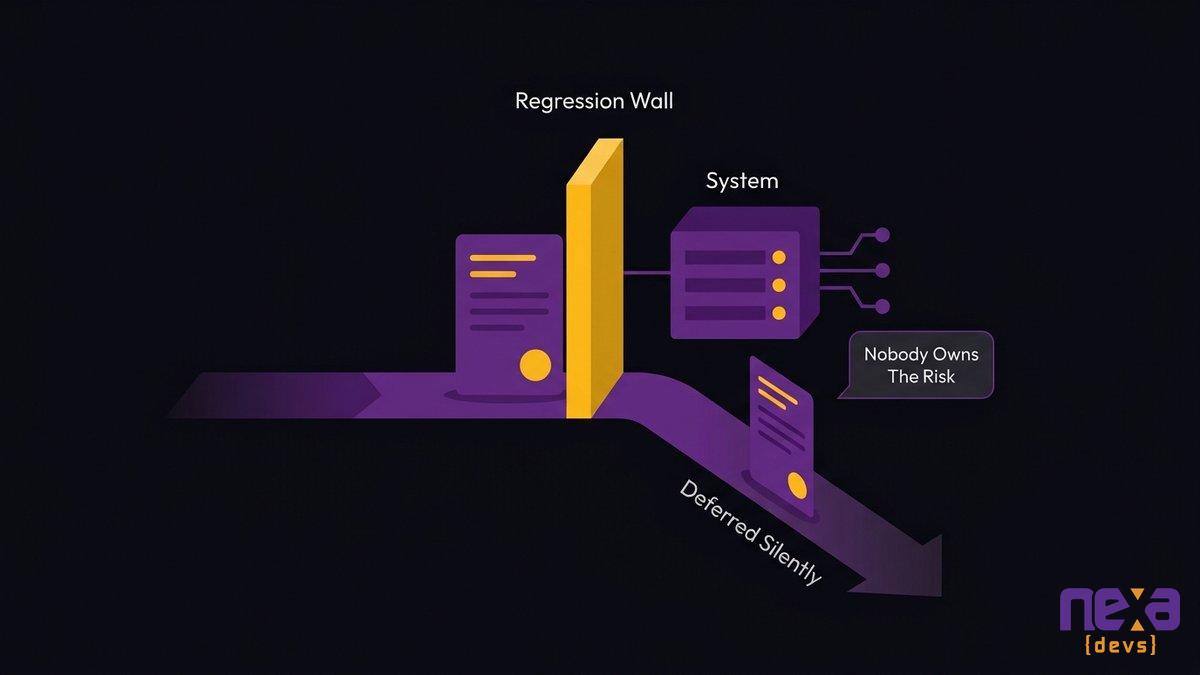
Risk nobody wants to own is how work leaves the roadmap without anyone making a decision.
Where the Time Actually Goes: Waiting, Approving, Re-Verifying
Most of your twelve weeks isn’t spent writing code. It’s spent waiting: for a reviewer with context, for a test environment, for someone senior enough to approve the risk.
Separating waiting from working
Time a single one-line change from commit to production and split the clock into two buckets: time someone was actively working on it, and time it sat in a queue waiting on a person, an environment, or a signature. In systems with a high cost of change, the waiting bucket usually dwarfs the working bucket, because every handoff point exists to manage risk the system itself created.
Why adding process makes it slower, not safer
The instinct when a release goes wrong is to add a review step, a sign-off, a checklist. Each one adds waiting time without reducing the surface area of the change, so the system gets a little slower and no safer. Google’s DORA research has spent a decade documenting this pattern across thousands of teams: the fix that actually improves both speed and stability is reducing batch size and blast radius, not stacking more approval gates on top of a system that’s already hard to change.
Why AI Coding Tools Did Not Move This Number
Your engineers have had AI coding assistants for two years now. The twelve weeks didn’t become eight, and that’s worth sitting with before buying more licenses.
The bottleneck was never typing speed
AI tools write code faster. They don’t reduce how much of the system a change touches, and they don’t make re-verification any cheaper, because re-verification was never about how fast someone could type in the first place. A September 2026 survey of 945 CIOs and CTOs by GFT Technologies found that more than four in five tech leaders had cancelled at least one AI pilot because their legacy systems created limitations for the project, CIO Dive reported. AI ran into the same wall your release cycle did.
What AI did change: the toil moved to verification
Writing a change got cheaper. Trusting a change did not. If anything, AI-generated code stacks a fresh verification burden on top of the old one, since someone now has to confirm the AI read the system correctly. The toil moved one step downstream instead of disappearing.
Four Questions That Tell You Your Real Cost of Change
You don’t need a system-wide audit to know where you stand. Four questions, answerable this week with data you already have, tell you almost everything.
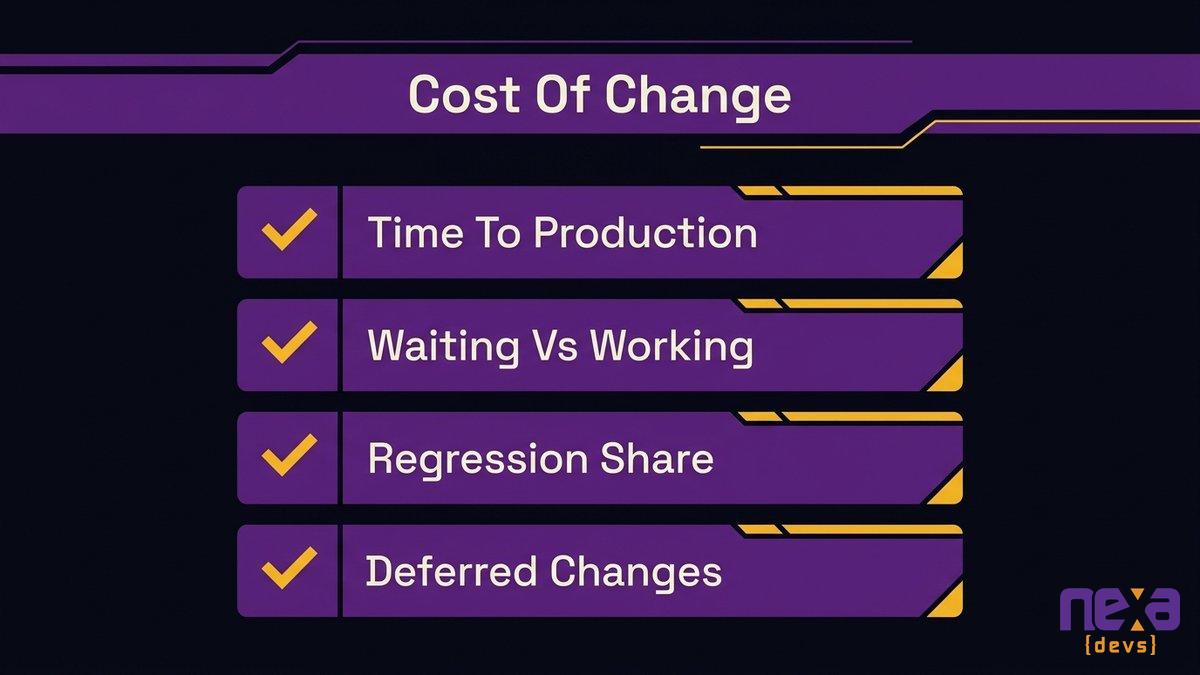
Four concrete questions tell you where your own release cycle is losing time.
How long does a one-line change take to reach production?
Time it literally, start to finish. If the answer is measured in weeks instead of hours or days, your constraint lives in the system itself.
How much of that time is waiting rather than working?
Split the clock from the question above into active work and queue time. A high waiting share points to approval and handoff bottlenecks. A high working share points to the change itself being genuinely hard.
What share of your release window goes to regression?
Ask your QA lead what percentage of a typical release cycle is spent re-testing code the release didn’t actually change. There’s no universal healthy number here, but if nobody can even estimate it, that’s itself an answer.
How many changes get deferred because nobody is confident?
This is the number leadership never sees, because work nobody schedules never registers as late. Ask your engineering leads to name three changes they’ve been avoiding, and in about ten minutes you’ll have located your highest concentration of risk.
What to Do With the Answer, Before You Choose an Approach
Once you can name where your cost of change concentrates, you have something most teams never get: a target instead of a guess.
Locate where change cost is concentrated instead of guessing
An architecture assessment that maps dependencies and ownership tells you which part of the system is actually generating most of your waiting and re-verification time. Many teams skip straight to a modernization approach without ever running this step, which is how a rewrite ends up touching parts of the system that were never the problem.
Get the knowledge needed to change the system safely out of one person’s head
Whatever you decide to do next, it only works if the people doing the work understand the system well enough to change it safely. That means architecture decision records and system documentation handed to your team, not retained by whoever did the work, so the next change doesn’t depend on the same one or two people again.
Why the answer is not automatically a big project
It’s tempting to treat a high cost of change as proof you need a full rewrite. Resist that. Modernization projects that reach for scope before locating the actual concentration of risk routinely run past both budget and timeline. Walk into the scope conversation with four measured numbers and you’re arguing from evidence instead of from dread. The choice between a big-bang rewrite and incremental modernization comes after that, once the diagnosis is in hand.
Measuring your cost of change takes no new platform and no new vendor relationship. It takes an honest look at where the time goes between a commit and a customer seeing the result. If that exercise surfaces more than you want to carry alone, Nexa Devs runs AI-assisted architecture assessments that pinpoint where your change cost concentrates. We modernize live systems without disrupting the operations running on them today, hand over every architecture decision record and system document to your team as standard, and stay engaged under an ongoing partnership long after launch. Schedule a call and walk through your own four numbers with us.
FAQ
What counts as a long software release cycle?
Anything beyond two to four weeks from commit to production is generally considered slow by modern standards. Elite teams release multiple times a day. A twelve-week cycle usually means the system itself has become expensive to change.
Can AI actually understand legacy code?
AI tools can read, summarize, and even modify legacy code, but understanding isn’t the same as safely changing it. AI-assisted changes still need the same re-verification a human change needs, which is why AI hasn’t shortened most release cycles on its own.
How do you work effectively with legacy code?
Map where a single change ripples across the system before you touch it, rather than rewriting everything at once. Document dependencies as you find them and let confidence in the system, not a deadline, decide how big a release gets.
How many companies are still running on legacy systems?
Most established mid-market and enterprise organizations run at least one business-critical application on infrastructure built years or decades ago, because replacing a working system is riskier than maintaining one.