Outsourcing Software Development
Software Vendor Accountability: Name Your Engineers
Software vendor accountability fails when nobody governs your actual roster. See the sprint-level signals that catch a silent engineer swap before it costs you.

We build, modernize, and maintain the systems your business runs on with AI-assisted development across every stage, complete documentation your team owns, and a post-launch SLA that defines what we’re accountable for.
Most software problems aren’t caused by bad engineers. They’re caused by systems built to ship, not to last, and by vendors whose accountability ended the moment the project did. You’re not looking for more developers. You’re looking for a team that treats your system like they’ll have to live with it.
We do.
They’re failing because the people who built them didn’t have to own what they built.
We work with mid-market companies whose software was written to spec but not to last — systems that are expensive to maintain, impossible to hand off, and completely dependent on whoever built them originally. Every time a developer leaves, a little more institutional knowledge walks out with them.
That’s the problem we fix. Not just by building better software, but by building it in a way that makes your team more capable, not more dependent on us.
We use Claude Code and Model Context Protocol integrations across our full development process. Mechanical work moves at AI speed. Architectural decisions stay with senior engineers who review and own every output before it ships.
You get faster delivery without the governance gap most AI-heavy teams create. Every AI-generated output is documented to the same standard as hand-written code.
Every engagement includes a structured post-launch partnership with defined response times, scope commitments, and escalation paths. You know what we’re responsible for, for how long, and what happens if we fall short.
That’s not a retention strategy. It’s the standard we hold ourselves to because we built the system.
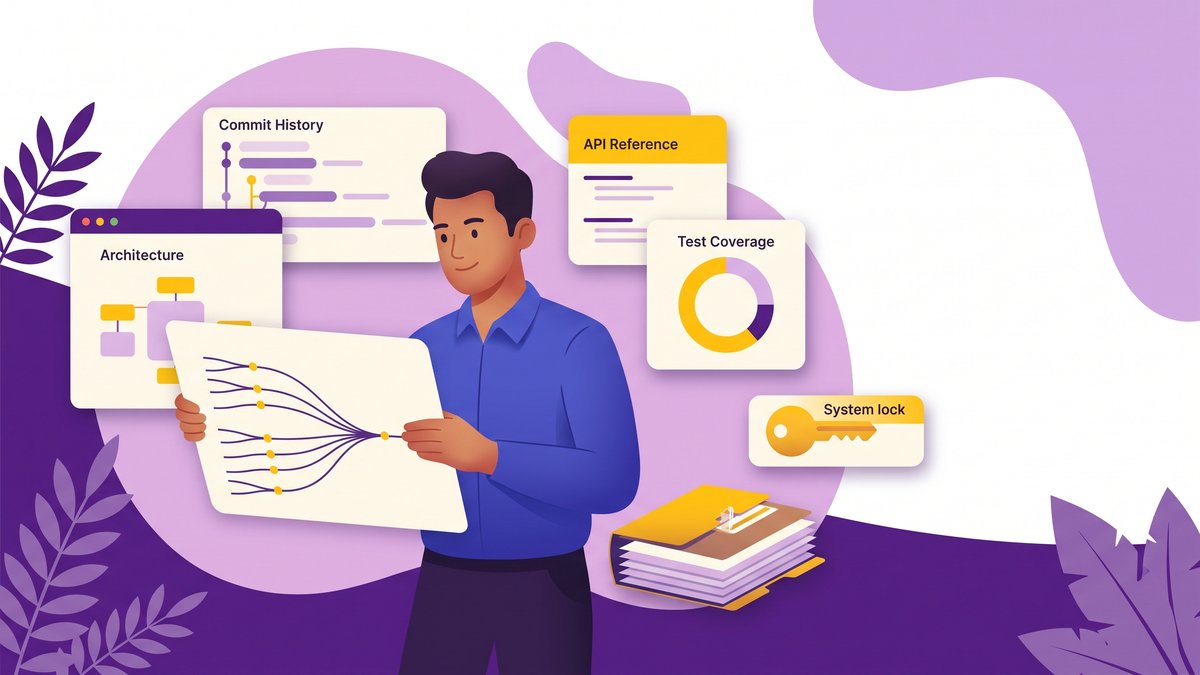
Architecture diagrams, technical decision logs, codebase walkthroughs, deployment runbooks, and onboarding guides produced continuously throughout the project, not assembled in the last sprint.
The standard we build to: if you needed a new engineering team tomorrow and have them productive in two weeks, you could.
Your current system was built to solve a problem that existed five years ago. Today it’s blocking every new initiative: AI integrations, compliance requirements, product roadmap changes, or just the ability to hire engineers who want to work with modern tools.
We assess what can be migrated, what needs to be rebuilt, and what’s worth keeping. You get a system your team understands, your engineers can maintain, and your business can grow on.
How Legacy System Modernization works →Running meaningful AI generative workflows, agentic automations, LLM integrations requires clean data, modern architecture, and systems that weren’t designed to be siloed. Most companies discover this the first time they try to build something with AI and hit a wall.
We make your infrastructure AI-capable before you need it to be. The companies doing this now are the ones who’ll have a structural advantage in three years.
What AI-ready actually means →Senior engineers, embedded in your team. Not a managed service you hand work to. Engineers who work in your codebase, attend your standups, and are accountable to your product manager.
We staff with engineers who can make architectural decisions, not just execute tickets. And because we’re a long-term partner rather than a staffing agency, you get continuity the same engineers, project after project.
How team extension works →For companies that don’t want to manage a vendor relationship, an embedded engineering team with quarterly planning alignment, defined escalation paths, and an SLA that evolves as your product does.
Your product changes. Your team grows or contracts. Your technology shifts. We adapt with it, and we’re accountable at every stage, not just at launch.
You have tools, APIs, and data sources that don’t talk to each other — and processes your team handles manually because no one has built the connection yet. We design and build end-to-end automations using n8n, Claude, and custom integrations that run reliably, are fully documented, and your team can modify without us.
From internal approval flows to client-facing data pipelines, we build workflows that reduce the manual layer between your systems.
What an automation engagement looks like →Most of our client relationships are measured in years, not projects. Here’s what that looks like in practice.
We partnered with Townsend to support and enhance systems used in evidence-based psychological assessments. Our role focused on data processing automation, system reliability, and ongoing technical support.
HealthcareWe provided dedicated engineering support for fundraising and payment systems used by nonprofit organizations across the U.S. Our role focused on platform reliability, scalability, and long-term technical support for mission-critical systems.
Fundraising · Payments Processing · FinanceWe partnered with CHS to enhance and support their Electronic Medical Records platform. Our work focused on improving system performance, reliability, and ongoing maintainability in a regulated healthcare environment.
Healthcare – EMRFor over eight years, we have supported TSB’s operational platforms, helping maintain and evolve systems used by MVNO and telecom carriers. Our work ensured continuity, performance, and reliability in a fast-moving industry.
TelecommunicationsWe provide UNED with long-term engineering support across multiple systems, helping them scale platforms, integrate new applications, and maintain stability for one of Europe’s largest distance-learning universities.
Higher educationOver 10 years, we built and maintained 30+ specialized applications for UCLA’s David Geffen School of Medicine, from NIH grant reporting and clinical patient systems to lab equipment management and faculty reporting tools. Work included security hardening, Oracle-to-PostgreSQL migrations, and ongoing support across systems where accuracy directly impacts research and patient care.
Academic Research · Healthcare · Clinical SystemsSupporting critical systems through long-term engineering partnerships.
We work best with companies that have been burned before. The vendor who built something nobody else can read. The project that shipped without documentation. The team that got to go-live and discovered the real cost of the engagement three months later.
From first call to post-launch partnership, here’s what to expect at every stage.
We ask about your system, your team, your timeline, and what’s actually blocking you. You ask us anything. By the end, you know whether we’re the right fit and so do we. If we’re not, we’ll tell you that directly and point you somewhere better.
Before we scope anything, we look at what you have. We assess your codebase, your architecture, your existing documentation, and your team’s current capacity. This tells us what we’re actually dealing with, not what the brief says we’re dealing with.
We propose a specific scope, defined milestones, and documented deliverables, including documentation standards and post-launch SLA terms. You know what you’re getting and what we’re accountable for before we start.
We work in your stack, in your codebase, with your team. Claude Code and MCP integrations handle mechanical work at AI speed. Senior engineers review every architectural decision and own every output before it ships. Documentation is produced continuously, not assembled at the end.
We don’t hand off and disappear. Post-launch, we operate under a defined SLA: response times, scope commitments, escalation paths, and quarterly planning alignment. Your system is live, documented, and supported by the team that built it.
Most agencies define accountability as delivery. We define it as what happens after delivery. We include a post-launch SLA as a standard term, not a premium add-on; and we build every project to a documentation standard that means your team can work in the system independently. Those two things together are what separate us from most vendors you’ve encountered.
We deploy Claude Code and MCP integrations across our full development process or code generation, documentation, testing, and review workflows. Every AI output is reviewed by a senior engineer before it ships. Architecture decisions are made by people, not by AI. We use AI to handle mechanical work at speed. We use engineers to make every decision that requires judgment, accountability, or architectural context.
It means you could hire a new engineering team tomorrow and have them productive in two weeks. Specifically: architecture diagrams, technical decision logs explaining why we built things the way we did, codebase walkthroughs, deployment runbooks, integration documentation, and onboarding guides. All produced continuously throughout the engagement not assembled in the last sprint before handoff.
We’ve heard this from nearly every client who reached out after a rough experience. The specific things they cite: documentation that didn’t exist, engineers who rotated off mid-project, no accountability after launch, communication that degraded over time.
Our model is built against each of those: documentation produced from sprint one, the same engineers throughout, a post-launch SLA, and asynchronous communication designed for real time zone overlap with US teams.
Getting started with us is simple. Contact us through our website to schedule a consultation. Or give us a call +1 (302) 549-3168. During this initial discussion, we’ll discuss your project’s needs, how we can help, and the next steps to start working on your project.
After a discovery call and technical assessment, most engagements start within two to four weeks. The timeline depends on assessment complexity and your availability for onboarding, not ours.

“Great work, on time and high quality.”
Alfred EssaFormer MIT Sloan CIO
“All your software developers have been very responsive and a pleasure to work with.”
C.R OldhamFormer Senior Systems Engineer, NCA CASI / SACSCASI
“I very much appreciate how proactive and on top of the things you guys are. Thank you for being such a great company to work with!”
Jade RubrickDirector of Development, TRUiST (Former United Way)
“Your company offers talented individuals who are able to bring our needs to fruition. Our goals and expectations are meet by delivering quality to new development items”
Myron SearsAnalytics & Operations, Telecom Service Bureau
Many of our client relationships span years, not projects.
We don’t require you to migrate to a preferred technology. We assess what makes sense for your architecture, your team’s capability, and your long-term maintainability.
These are the technologies we work with most. We are open to other stacks too.
Reach out and let us know what you are working with.
Software vendor accountability fails when nobody governs your actual roster. See the sprint-level signals that catch a silent engineer swap before it costs you.
Technical due diligence in 2026 prices key-person risk into your valuation. See what reviewers check and how documentation protects the deal and your business.
Unused Copilot licenses drain mid-market AI budgets when seats sit idle. Learn why placement, not training, fixes adoption and cuts wasted AI spend fast.
Thirty minutes. You describe what you’re dealing with the system, the team, the blocker, the history. We tell you whether we’re the right fit and what we’d do first.
No prepared pitch. No proposal emailed beforehand. A real conversation about your actual situation.
If we can help, we’ll tell you exactly how. If we’re not the right fit, we’ll tell you that too and we’ll tell you why.